Maternal condition
Airway, oxygenation, hemodynamics, bleeding, neurologic status, infection, pain, medications, access, laboratory trends, and current interventions.
After completing this chapter, you should be able to:
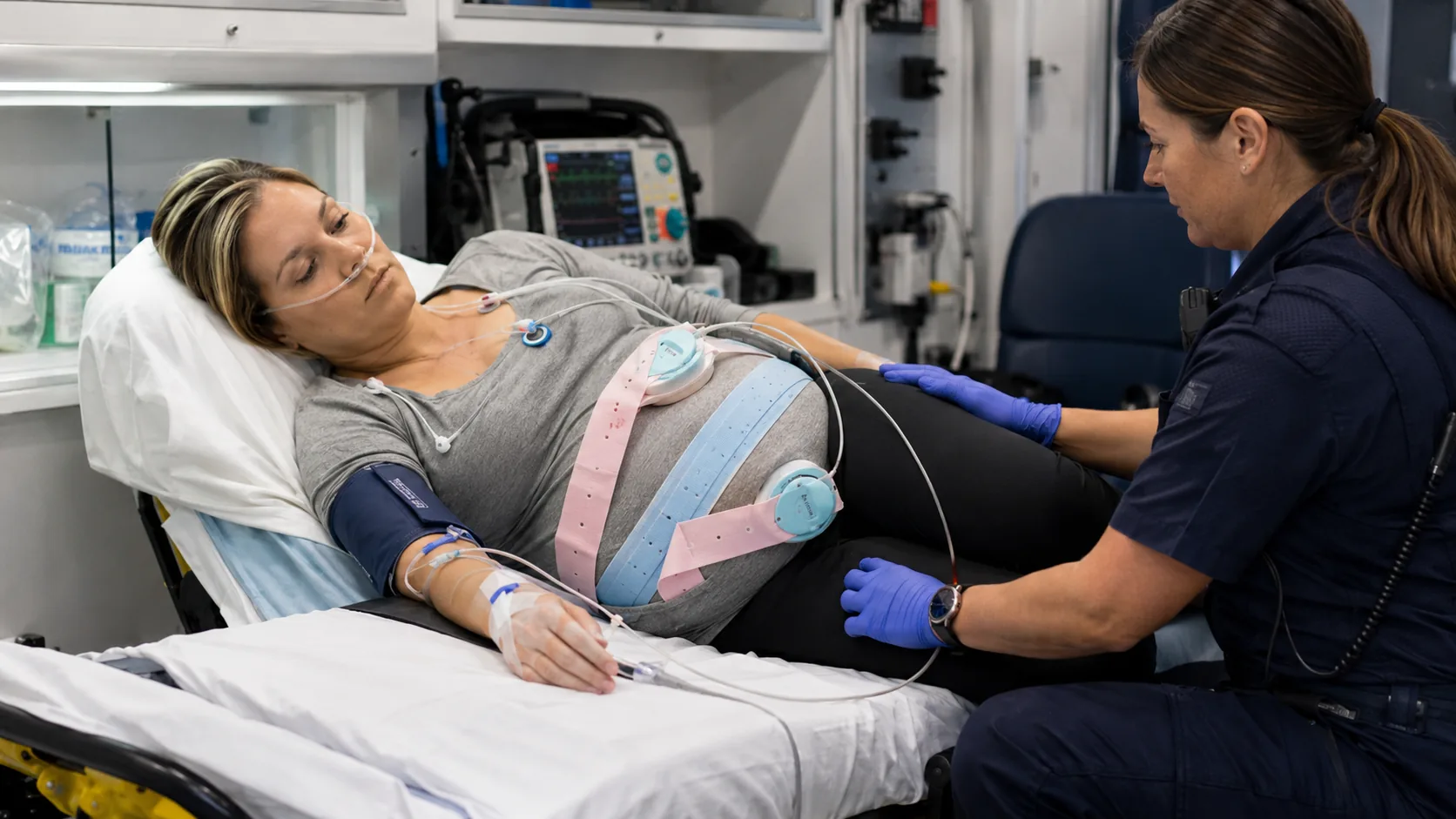
A patient at 34 weeks’ gestation is being transferred for severe preeclampsia. The receiving center is 82 minutes away by ground. The main ambulance oxygen supply reads 800 psi. Magnesium sulfate and an antihypertensive infusion are running on sending-facility pumps. The fetal monitor has an internal battery, but the crew has never used that model. Thunderstorms are approaching the rotor-wing route, and the nearest alternate hospital has obstetric surgery but no high-level neonatal intensive care unit.
Each item is manageable alone. Together, they define the mission risk. The team must decide whether to replace oxygen, reconcile pumps and concentrations, select ground or air, verify monitoring competence, plan for magnesium toxicity and severe hypertension, define diversion thresholds, and determine what capability is needed if delivery occurs before the tertiary center.
A maternal transport risk assessment should occur before movement and be repeated whenever the patient, route, weather, equipment, or destination changes. It is more useful than asking whether the patient is simply “stable.”
Airway, oxygenation, hemodynamics, bleeding, neurologic status, infection, pain, medications, access, laboratory trends, and current interventions.
Gestational age, fetal heart findings, presentation, contractions, membrane status, cervical change, delivery history, and probability of delivery en route.
Credentials, current competency, staffing, task loading, fatigue, airway ability, obstetric skills, neonatal resuscitation, and need for specialty personnel.
Vehicle, cot rating, oxygen, suction, power, pumps, medications, blood, fetal monitoring, warming, delivery, hemorrhage, and neonatal supplies.
Distance, roads, weather, turbulence, cabin altitude, lighting, noise, temperature, loading hazards, communications coverage, and access to alternate facilities.
Acceptance, bed and operating-room availability, maternal and neonatal capability, route, alternate destination, and how the plan changes if delivery becomes imminent.
The appropriate mode is the one that provides the needed clinical capability and produces the safest total mission—not necessarily the vehicle with the highest top speed. Compare dispatch time, crew assembly, bedside preparation, loading, travel, unloading, weather, landing-zone access, and the time required to reach definitive care.
| Question | Why it matters |
|---|---|
| How much time is actually saved? | Compare door-to-door time, not just flight time. |
| Which team has the needed competency? | The fastest vehicle is not safer if the crew cannot maintain the required therapy. |
| Will the patient need frequent hands-on intervention? | Space, noise, restraint requirements, and access differ by mode. |
| What are the weather and route risks? | Aviation may be delayed or canceled; ground routes may be affected by traffic, flooding, ice, or construction. |
| Where can the mission divert? | A plan without feasible alternates may become unsafe after departure. |
There is no single universal list of patients who must never be transported. The decision depends on local capability, urgency, available resources, and the risk of delay. The following findings should trigger an explicit pause and senior clinical review rather than automatic departure:
Urge to push, crowning, rapidly progressive labor, or presentation requiring immediate local intervention.
Airway failure, refractory shock, active major hemorrhage, eclampsia without control, or another condition requiring intervention that cannot be delivered safely in motion.
Insufficient crew, oxygen, power, medications, blood, monitoring, warming, equipment, or scope for the anticipated mission.
No confirmed acceptance, lost capability, unavailable operating room, or destination unable to meet maternal and neonatal needs.
Weather, mechanical problem, road conditions, weight limit, loading hazard, or communication failure beyond acceptable risk.
Unknown concentration, incompatible pump, depleted battery, unverified settings, or equipment the team cannot safely operate.
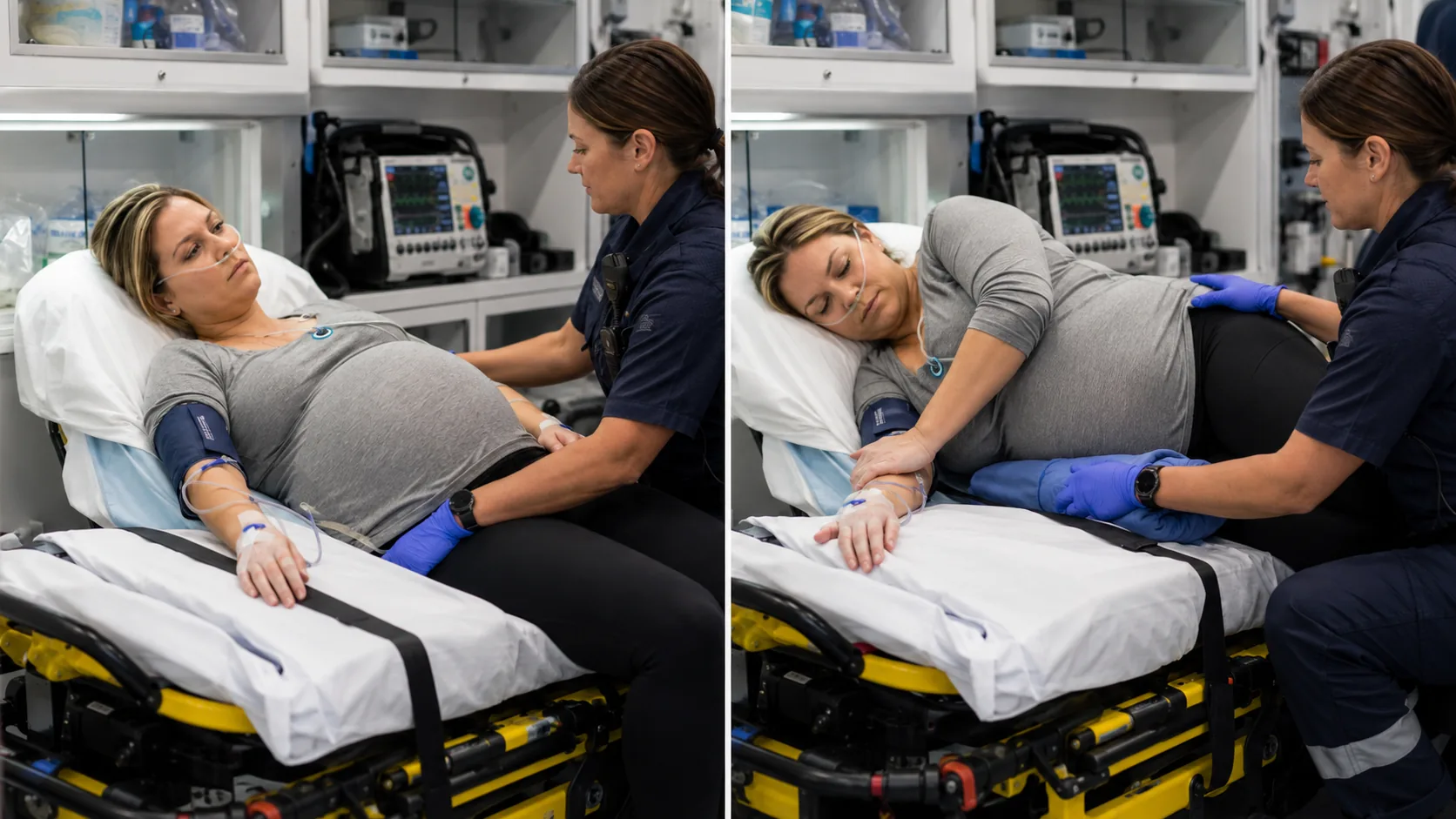
Federal ambulance-safety resources emphasize restraint use for patients and clinicians, treatment before movement when feasible, and securing equipment needed during the trip. Maternal transport adds the challenge of maintaining left-lateral positioning, abdominal access, fetal transducers, and the ability to respond to delivery while preserving crash protection.
The IBSC handbook’s sample equipment question treats a main oxygen supply at 800 psi as a readiness failure requiring replacement before transport. The exam is testing the principle that the mission must begin with enough reserve for a critically hypoxic patient, prolonged transfer, or unexpected delay—not the ability to calculate down to the last usable liter.
Prepare warm blankets and neonatal thermal supplies. Avoid maternal overheating, but plan aggressively against newborn heat loss if delivery is possible.
Confirm visual and audible alarms, use waveform trends, and arrange task lighting before departure.
Expect monitor artifact, pump and line movement, discomfort, contractions, and reduced procedural precision.
Know radio and cellular limitations, alternate channels, dead zones, and the process for urgent medical control.
The handbook specifically identifies weight-rated transport devices, fetal monitoring, warmer or blankets, medication storage, uterine hemorrhage devices, delivery equipment, suction, and neonatal supplies. The team does not need every device for every transport, but it must understand what is required for the patient’s risk profile.
 Vehicle and cot readinessWeight limits, cot lock, charging, mounting points, secure storage, temperature, and working space.
 Airway, oxygen, and suctionOxygen reserve, tested suction, BVM, airway devices, capnography, ventilator circuits, and backup plan.
 External fetal monitoringTransducers, belts, cables, paper or data capture, battery, maternal pulse comparison, and trained interpretation.
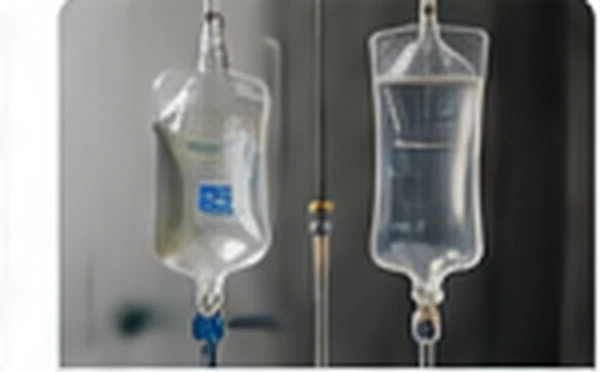 IV, IO, and pumpsCompatible tubing, adequate access, battery, spare channels, secure mounting, and known concentrations.
 Medication storageTemperature, light protection, expiration, controlled access, rescue agents, and enough volume for delay.
 Delivery and hemorrhage suppliesDelivery bag, cord care, neonatal ventilation, warming, uterotonics, hemorrhage kit, and local specialty devices.
 Positioning and restraintShoulder and lateral restraints, left tilt, wedges, padding, spinal needs, and access to the abdomen.
 Information and route planOrders, records, acceptance, labs, imaging, medication record, route, alternates, and contact numbers.
A Bakri balloon is an intrauterine balloon tamponade device used in postpartum hemorrhage. The JADA system uses low-level vacuum to promote uterine collapse and control abnormal postpartum uterine bleeding. These devices are not interchangeable, and transport clinicians should know whether one is present, how it is secured, what drainage or vacuum parameters are ordered, what findings require escalation, and whether the receiving team has been briefed. Device management must follow the sending specialist’s orders, product instructions, local policy, and scope.
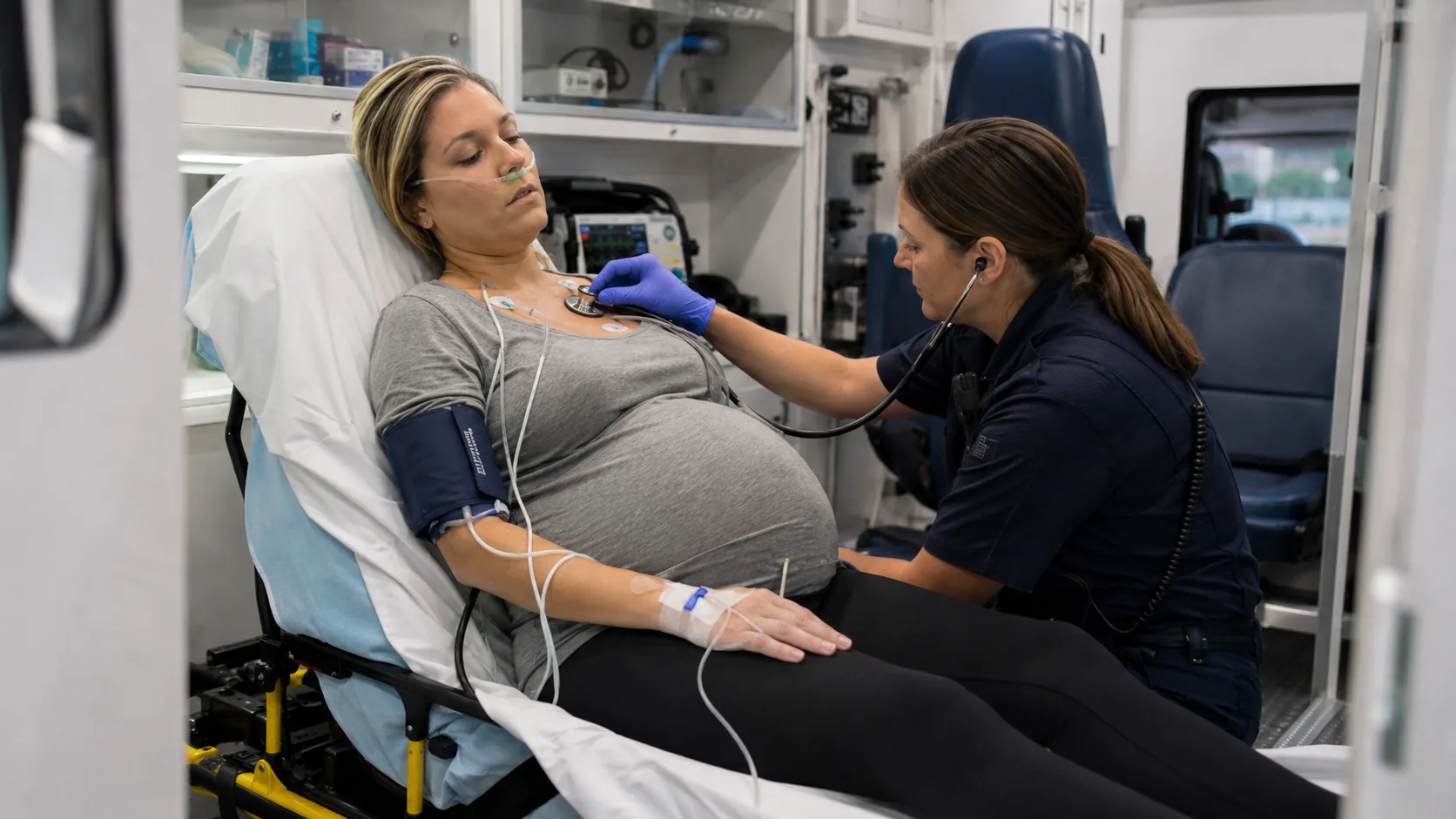
Continuous external monitoring may be valuable when it is available, indicated, technically feasible, and interpreted by a qualified clinician. It does not replace maternal assessment. If continuous monitoring cannot be maintained, use the ordered or protocol-defined alternative, document limitations, and communicate changes. Persistent fetal bradycardia or a concerning pattern should trigger immediate maternal reassessment, treatment of reversible maternal causes, communication, and reconsideration of destination.
Define thresholds for airway escalation, seizure, severe hypertension, hemorrhage, shock, pulmonary edema, fetal bradycardia, and imminent delivery.
Identify manual backups for ventilation, suction, medication delivery, fetal assessment, warming, and monitoring.
Know the primary route, alternate route, weather thresholds, fuel or charging concerns, and safe stopping or landing options.
List the closest facilities by maternal surgery, blood bank, neonatal stabilization, trauma, and critical-care capability—not merely distance.
Diversion is a clinical decision. Consider remaining time, patient trajectory, fetal status, required immediate intervention, receiving capability, and the time required to communicate and physically change course. The closest facility may be the right destination when immediate operative or resuscitative capability is needed, even if it is not the planned tertiary center.
The patient from the opening scenario remains awake with blood pressure 168/108 mm Hg, respiratory rate 20/min, SpO₂ 98%, and a reassuring fetal baseline. She is receiving magnesium sulfate and a titrated antihypertensive. The team confirms that the main oxygen tank is at 800 psi, the fetal monitor battery is at 45%, and one pump will not lock into the ambulance mount.
Decision: Replace or replenish the oxygen supply, provide reliable power for the fetal monitor, transfer the infusion to a compatible secured pump with a full readback, and verify rescue medications. These are predictable readiness hazards, not reasons to accept risk because the patient currently looks stable.
Rotor wing would reduce travel time by approximately 25 minutes, but thunderstorms are within the flight corridor and launch is delayed. Ground transport can depart now with an experienced critical-care team and has two diversion hospitals along the route.
Decision: Compare total mission time and reliability rather than theoretical cruise speed. Ground transport is reasonable when it provides timely departure, the required clinical capability, and better diversion flexibility.
Forty minutes into transport, the patient develops dyspnea, SpO₂ falls to 91%, bilateral crackles are heard, and blood pressure is 176/114 mm Hg. Fetal monitoring shows recurrent decelerations. The planned destination is 38 minutes away; a hospital with obstetric anesthesia, emergency cesarean capability, blood bank, and neonatal stabilization is 9 minutes away.
Decision: Treat maternal oxygenation and hemodynamic deterioration, reassess fluid and medication history, notify medical control and facilities, and divert when the closer hospital provides the immediate capabilities now required. Maternal respiratory failure and fetal compromise have changed the mission.
Answer: Total mission time includes launch, team assembly, bedside preparation, loading, travel, landing, unloading, and ground movement. Weather, access, crew capability, space, and diversion options also affect safety.
Answer: Replace or replenish it before departure. The mission requires reserve for deterioration, higher flow, ventilation, delay, and diversion.
Answer: External fetal monitoring may capture maternal pulse or produce artifact, especially during movement. A plausible number is not automatically a valid fetal signal.
Answer: Secure the patient, clinicians, cylinders, monitors, pumps, bags, and other equipment; complete foreseeable procedures before movement when feasible; and minimize unrestrained care in motion.
Questions emphasize mode selection, readiness, equipment, oxygen and power, monitoring, restraints, and diversion.