Maternal transport
The pregnant patient is moved before delivery. When feasible and safe, antenatal transfer can allow delivery at a facility prepared for both maternal and neonatal needs.3
After completing this chapter, you should be able to:
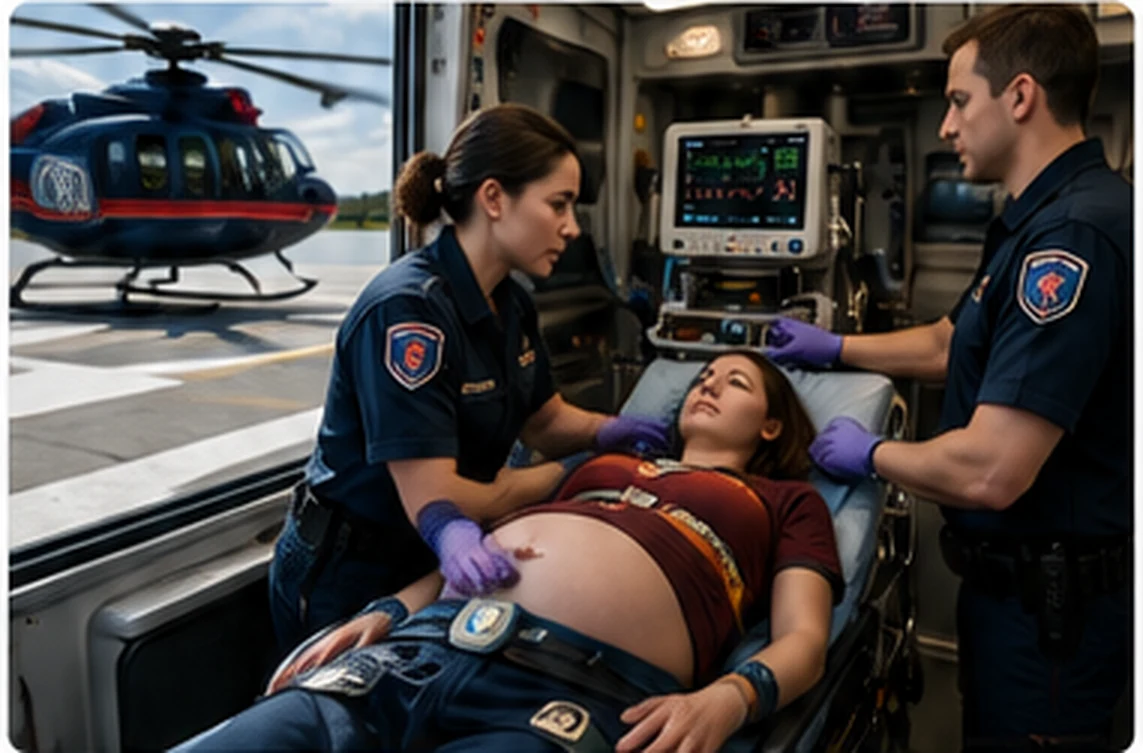
A 27-year-old patient at 29 weeks’ gestation presents to a rural hospital with preterm premature rupture of membranes. She is afebrile, hemodynamically stable, not actively pushing, and has a reassuring fetal heart rate. The hospital can evaluate and begin treatment, but it does not have around-the-clock obstetric anesthesia, maternal-fetal medicine, or a neonatal intensive care unit appropriate for an extremely preterm newborn.
The transfer is not being requested because the current team has failed. It is being requested because the patient’s anticipated needs exceed the facility’s capabilities. The safest outcome depends on what happens before departure: confirming the diagnosis and urgency, beginning indicated treatment, determining whether delivery is likely during transport, confirming maternal and neonatal capacity at the receiving center, selecting the appropriate transport team and mode, and preparing for predictable deterioration.
Maternal-fetal transport is the movement of a pregnant or recently postpartum patient between locations so that she—and, when applicable, the fetus or newborn—can receive care at a facility with the necessary personnel, technology, surgical capability, blood products, critical-care resources, and neonatal services. Regionalized maternal care exists because no single facility can safely maintain every specialty and resource at all times.2
The term maternal-fetal transport is useful because the transport team must continuously consider two interdependent physiologies. The mother is the transport team’s direct patient. The fetus is assessed through maternal condition, gestational age, fetal movement, Doppler or electronic monitoring, ultrasound information, and the obstetric diagnosis. Maternal stabilization is usually the most effective fetal intervention.
The pregnant patient is moved before delivery. When feasible and safe, antenatal transfer can allow delivery at a facility prepared for both maternal and neonatal needs.3
There is no separate fetus-only vehicle mission before birth. The fetus is transported within the mother, and fetal benefit depends on maternal stability and appropriate destination capability.
After birth, the newborn becomes a separate patient and may require a specialized neonatal transport team, incubator, ventilatory support, and neonatal medication capability.
A recently delivered patient may require transfer for hemorrhage, cardiomyopathy, hypertensive emergency, sepsis, surgical complication, or critical care while the newborn remains elsewhere or travels separately.
The ACOG/SMFM Levels of Maternal Care framework organizes facilities by the minimum capabilities, personnel, and resources available for increasingly complex maternal conditions. The system includes birth centers and hospital levels I through IV. Level I provides basic care, level II specialty care, level III subspecialty care, and level IV regional perinatal health care with the broadest on-site resources.2
Designed for carefully selected low-risk patients with established consultation and transfer pathways when risk changes.
Provides care for low- to moderate-risk pregnancies and can identify, stabilize, and arrange transfer when needs exceed local capability.
Manages selected higher-risk conditions with expanded obstetric expertise and resources beyond basic care.
Supports complex maternal and fetal disease with maternal-fetal medicine, critical-care capability, advanced imaging, and broad subspecialty access.
Provides the highest level of coordinated maternal care, including care for the most complex medical, surgical, and obstetric conditions.
Destination selection requires more than asking, “Does this hospital deliver babies?” The transport plan must compare three capability sets:
A safe transfer is a continuous clinical process with no unowned interval. It begins with recognition that the patient needs another level of care and ends only after a complete bedside handoff and transfer of responsibility.
SMFM emphasizes that maternal transfer requires communication about the health of both mother and fetus, bed space and personnel in both labor-and-delivery and neonatal units, transportation arrangements, and relevant inpatient and outpatient records. The amount of information creates a predictable risk for communication failure, which is why standardized briefing tools are valuable.4

Team composition varies by system, patient acuity, transport mode, distance, scope, and regional resources. The IBSC identifies paramedics, nurses, advanced practice clinicians, respiratory therapists, and physicians as clinicians who may participate in or oversee maternal transport.1 The essential requirement is not a particular title; it is that the team has the competencies and authority needed for the patient’s likely problems.

Maintains the mission overview, confirms the plan, assigns roles, communicates with medical control and facilities, and decides when the plan must change.

Performs maternal assessment, monitors fetal status when available, manages medications and procedures, and trends response to treatment.

Supports procedures, manages pumps and equipment, prepares delivery or airway supplies, documents events, and anticipates next steps.

Provides safe vehicle operation, communicates road and weather limitations, minimizes avoidable motion, and supports scene and loading safety.
Stabilization for transport is not the same as curing the condition. It means treating immediate threats and minimizing foreseeable risk within the sending facility’s capability while avoiding unnecessary delays in definitive care. A patient may remain critically ill and still require transfer because the condition cannot be definitively managed where she is.

Chapter 2 addresses the detailed equipment and logistics blueprint. At the orientation level, every mission should provide immediate access to the tools required for the mother’s current care, the predicted emergency, delivery, and initial neonatal stabilization. The exact list depends on local protocols and team scope.
 Maternal monitoringECG, blood pressure, SpO₂, capnography when indicated, temperature, and serial clinical assessment.
 Fetal assessmentDoppler or electronic fetal monitoring appropriate to team capability, gestational age, and mission.
 Airway and oxygenOxygen calculation, suction, BVM, advanced airway strategy, capnography, and backup devices.
 Access and infusionIV/IO supplies, pumps, pressure capability, compatible tubing, medication labels, and spare power.
 Maternal medicationsScheduled therapies, rescue medications, hemorrhage agents, antihypertensives, magnesium rescue, and emergency drugs.
 Delivery and newbornDelivery kit, cord supplies, warming, neonatal ventilation, suction, and resuscitation equipment.
 Safety and positioningWeight-rated stretcher, restraints, left-tilt method, PPE, safe securing of equipment, and lifting resources.
 InformationTransfer form, medication record, fetal tracings, imaging, laboratory results, consents, and contact numbers.
Transport decisions are dynamic. The original destination and plan are provisional until the handoff is complete. A structured framework prevents the team from continuing simply because the vehicle is already moving.
Benefits of reaching the destination exceed transport risk; immediate threats have been addressed; acceptance, team, equipment, and route are confirmed.
A correctable readiness problem exists: unsecured airway, empty oxygen source, unclear pump settings, missing blood, absent acceptance, uncontrolled pain or seizure, or incomplete team capability.
Labor is rapidly progressing, birth may occur before arrival, or the patient has signs of imminent delivery. Bring delivery and neonatal plans forward immediately.
Maternal or fetal status changes, the original destination is no longer appropriate, travel conditions deteriorate, or a closer facility now provides the capability needed immediately.
A patient in labor may be unsafe to transfer when there is inadequate time to reach another hospital before delivery or when movement poses a threat to the patient or fetus. Conversely, when time permits, antenatal transfer for preterm labor or preterm membrane rupture is generally preferred to neonatal transfer after delivery because delivery at an appropriately resourced center can improve neonatal outcomes.35
EMTALA applies to Medicare-participating hospitals with emergency departments and requires an appropriate medical screening examination when emergency evaluation is requested, stabilizing treatment for an identified emergency medical condition within the hospital’s capability, and an appropriate transfer when the hospital cannot stabilize the condition within its capability or when the patient requests transfer.6
For an unstabilized patient, CMS describes four core features of an appropriate transfer:
The sending hospital provides treatment within its capacity that minimizes risk to the patient and, when in labor, the unborn child.
The receiving facility has available space and qualified personnel and agrees to accept and treat the patient.
Relevant history, findings, diagnosis, tests, treatments, transfer certification or request, and other available records accompany the patient or follow as soon as practical.
The transfer uses personnel, equipment, and medically appropriate life-support measures suited to the patient’s condition.
When an unstabilized patient is transferred because expected medical benefits exceed the risks, the physician certification must summarize those risks and benefits. In labor, the analysis includes risk to both the patient and unborn child.7 Transport clinicians should understand the process but should not independently substitute their judgment for hospital legal obligations, medical staff certification, or local policy.
Communication should create a shared mental model, not merely transmit facts. Before departure, the team should know the current maternal and fetal status, what has changed, what is being treated, what is likely to happen next, and what action threshold will trigger a call, diversion, or delivery preparation.
| Phase | Essential communication | Common failure |
|---|---|---|
| Before departure | Diagnosis, gestational age, labor status, fetal status, treatments, labs, blood, allergies, access, accepting clinician/unit, and contingency plan. | Transport team receives a partial report after the patient is already moved. |
| During transport | Trend changes, interventions, response, estimated arrival, fetal tracing changes, delivery risk, and resource requests. | Waiting until arrival to report deterioration. |
| At handoff | Baseline, transport events, current assessment, medication totals, pump settings, bleeding, contractions, fetal status, procedures, pending results, and safety concerns. | Verbal report is interrupted while lines, monitors, and pumps are exchanged. |
A 32-year-old patient at 27 weeks’ gestation presents to a critical-access hospital with contractions every six minutes and cervical change from 1 cm to 3 cm. Membranes are intact. The fetal heart rate is 150/min with moderate variability. The hospital has no NICU and no obstetric anesthesia overnight. A regional Level III center is 65 minutes away by ground and has maternal and neonatal capacity.
Analysis: The indication is not simply “preterm labor.” The resource gap includes the possibility of very preterm delivery, neonatal resuscitation, respiratory support, maternal anesthesia, and emergency operative delivery. The transfer benefit is delivery at a center prepared for both patients.
The transport team arrives and learns that the magnesium infusion was mixed at a concentration unfamiliar to the crew, the pump has 20 minutes of battery remaining, the second IV is infiltrated, and the last fetal assessment was 40 minutes ago.
Decision: Pause briefly to reconcile the infusion, secure continuous power or a compatible pump, restore appropriate access, repeat maternal and fetal assessment, and define the rescue plan. These steps reduce foreseeable risk and should be completed without creating an unnecessary delay.
Twenty minutes into transport, contractions are every two minutes, the patient reports rectal pressure, and fetal heart rate becomes difficult to obtain. A hospital with obstetric delivery and neonatal stabilization capability is 7 minutes away; the original Level III center is 42 minutes away.
Decision: Reassess immediately, prepare for delivery, notify medical control and both facilities, and compare the risk of continuing with the capability of the closer hospital. The original destination is not a promise. The destination must be reconsidered when the patient’s time-to-delivery and risk profile change.
Answer: The team must continuously account for maternal physiology, fetal status, labor and delivery risk, and the receiving facility’s neonatal capability while treating the mother as the direct patient.
Answer: The mother may also require advanced obstetric surgery, anesthesia, blood bank, ICU, cardiac, neurologic, trauma, or other subspecialty capabilities. Maternal and neonatal resources must both match the anticipated needs.
Answer: Immediate threats have been treated and foreseeable transport risks have been reduced within available capability, while the patient still requires definitive care elsewhere.
Answer: Treatment that minimizes risk, receiving-facility acceptance and capacity, transfer of relevant records, and transport by qualified personnel with appropriate equipment and life-support measures.
Questions emphasize system thinking, destination capability, stabilization, team roles, and transfer readiness.